Your hate is killing me
Various studies have documented the depersonalization and negative effects experienced by many people who do not fit into the cisheterosexual norm. Violence, exercised through offensive comments, threats, beatings, and practices such as the misnamed "conversion therapies," often forces people to hide their sexual orientation or gender identity. However, repressing it does not change who we are; it only permanently affects our lives.
In this context and under these circumstances, SOGIECE (Efforts to Correct, Repress or Suppress Sexual Orientation, Gender Identity or Expression) arise, which are attempts to "correct" what does not need correction. These efforts can go to the extreme of forcing people to attend "conversion therapies," where practices such as kidnapping, forced medication or hormone therapy, torture, and even "corrective sexual assault" are committed, mainly affecting women, children, and adolescents.
The evidence agrees that these practices do not "cure" or modify sexual orientation or gender identity. Instead, they leave deep damage on the physical and mental health of victims and survivors and, in some cases, are associated with suicidal ideation or attempts.
For this reason, in Mexico, thanks to the work of collectives in favor of the rights of people of sexual diversity and gender identity, there has been a struggle and pressure on authorities to criminalize and penalize SOGIECE, making them prohibited and criminally sanctioned at the federal level since June 8, 2024. Unfortunately, in the state of Chihuahua, there is still no state-level classification of its own, fully approved in the State Penal Code.
Hatred and misinformation have allowed fraudulent and illegal practices that profit from the pain of families to persist. No effort can "cure" or change sexual orientation or gender identity: it only represses, depersonalizes, and in the most serious cases, kills.
As a member of the LGBTQIA+ community and a survivor of "conversion therapy," within the Nortejiendo collective, I had the opportunity to lead the conceptualization of the piece we presented at the Chihuahua LGBTQIA+ Pride March (2023).
Collectively, we created a textile and performance piece as a protest against ECOSIG because, although many people can take to the streets and identify themselves freely, there are still those who cannot. That is why it is important to continue demanding the legal recognition of our rights for a full and safe life.
Description
The piece was developed as a performance installation divided into three acts, conceived to reflect on the violence faced by LGBTQIA+ individuals and on the importance of support networks in the processes of liberation and identity affirmation.
First Act
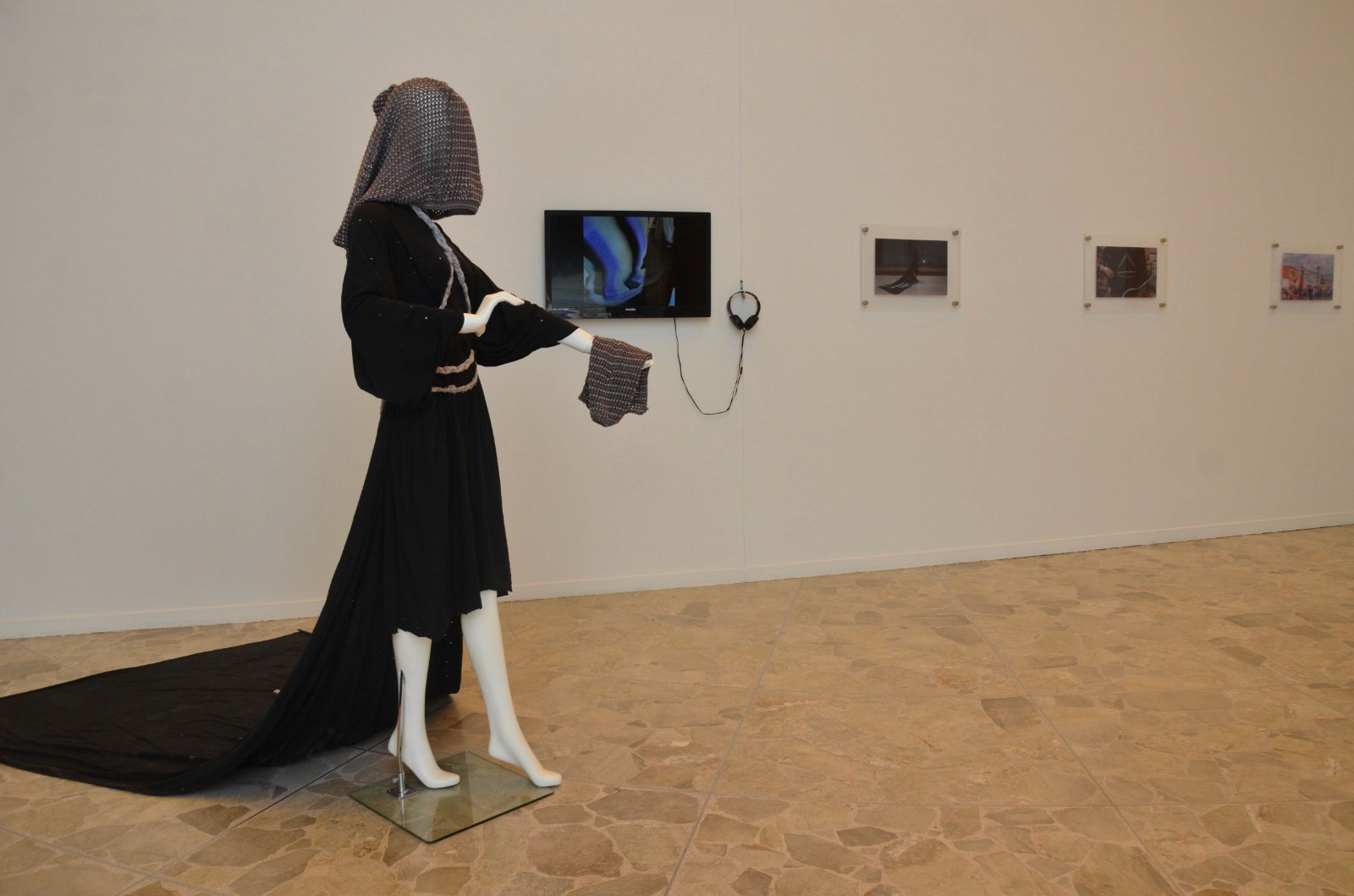
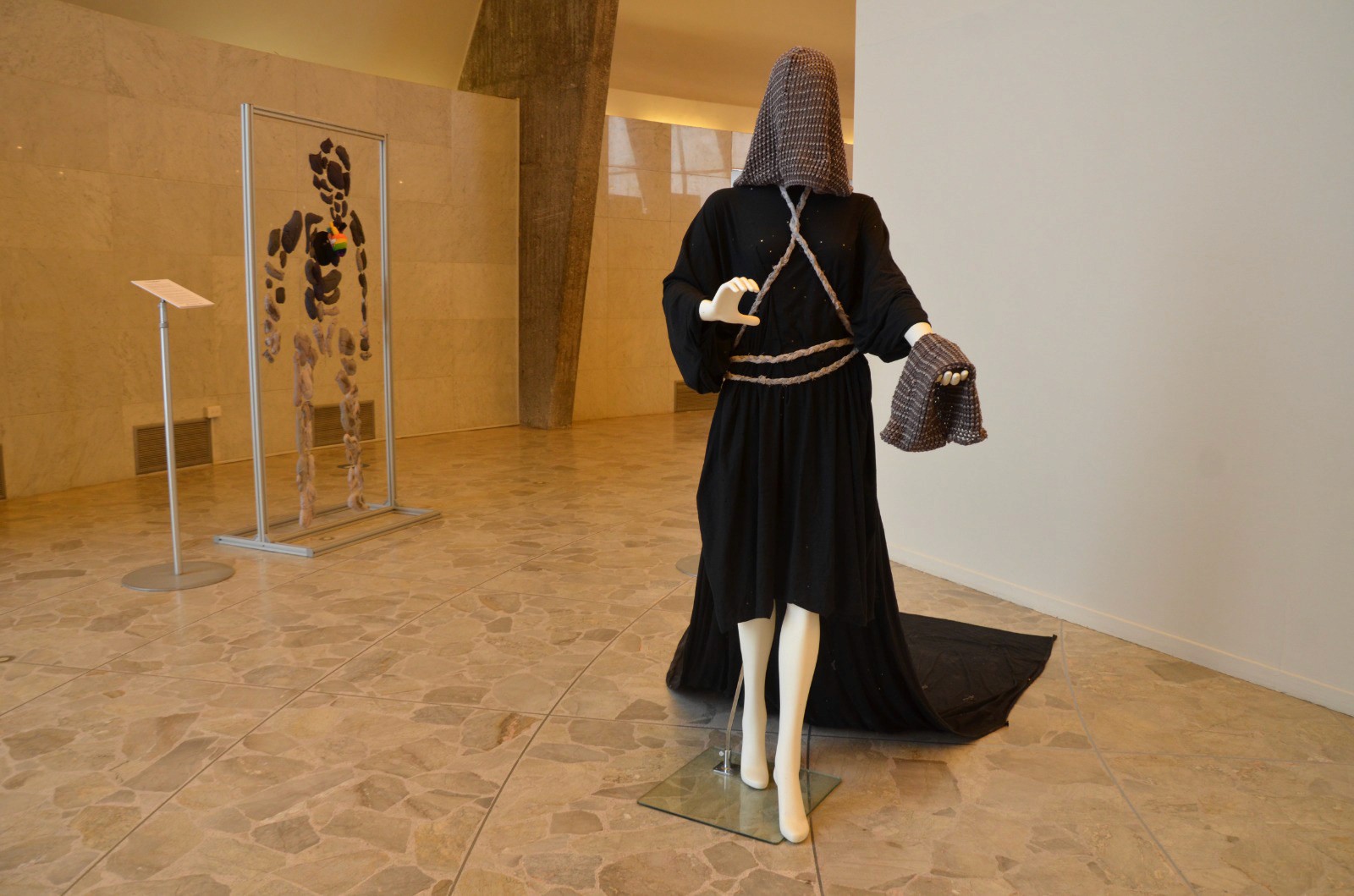
From the starting point of the march, I wore a black outfit from which amorphous textile bundles in gray tones hung. Additionally, I was wrapped in chains and wore a sack covering my head while carrying a small pouch. All of these elements represented the depersonalization, prejudices, and burdens that society imposes on people of sexual and gender diversity.
Throughout the route, participants of the performance removed these bundles one by one while shouting the slogan "Nothing to cure."
As I moved forward, those taking part in the march began to spontaneously join the slogan. In this way, the individual act was transformed into a collective experience, symbolizing how safe circles free of violence help us let go of the weights imposed by heteronormativity and social expectations.


Second act
Upon reaching the end of the march, the textile bundles were reorganized inside an aluminum frame to form a human silhouette. Once formed, I placed at its center a heart woven with the colors of the community's inclusive flag, which had been kept inside the sack I carried along the entire route.
This gesture sought to represent that, despite social attempts to suppress, modify, or deny our identities, there is an essence that remains intact and that no form of violence can "transform".


Third act
Upon finishing the assembly of the piece, they removed the chains, the mask, and the clothing that had accompanied me from the beginning. The final costume and the revelation represented the freedom conquered and the possibility of fully living one's own sexual orientation and gender identity in a safe environment.
The installation remained on display during the afternoon, generating a space for gathering, awareness, memory, and reflection.


Exhibitions
This piece was temporarily placed in the Plaza de Armas during the LGBT+ Pride March 2023, in the city of Chihuahua, Mexico.
It was selected by the Border Biennial, organized by the El Paso Museum of Art and the Museo de Arte de Ciudad Juárez, and was exhibited from January 15 to April 14, 2024, at the Museo de Arte de Ciudad Juárez.
Credits
* Work: Colectivo Nortejiendo (2023).
* Photography: Natalia Barragán Orozco.
Press
* El Economista (2024). "The art that detonates a wall, at the 2024 Border Biennial".
* Glasstire (2024). "Redefining the US-Mexico Border: Works from the 2024 Border Biennial".
* Noro (2025). "NORTEJIENDO: TEXTILE ART DEFENDING HUMAN RIGHTS FROM CHIHUAHUA".
* IEE Chihuahua (2025). "Nortejiendo: Art and textiles in resistance".